Dedicated retina room · Diabetic screening
Retina Care
The retina lines the back of the eye and is where sight begins. Most retinal disease causes no pain and no redness — which is exactly why it is so often found late.
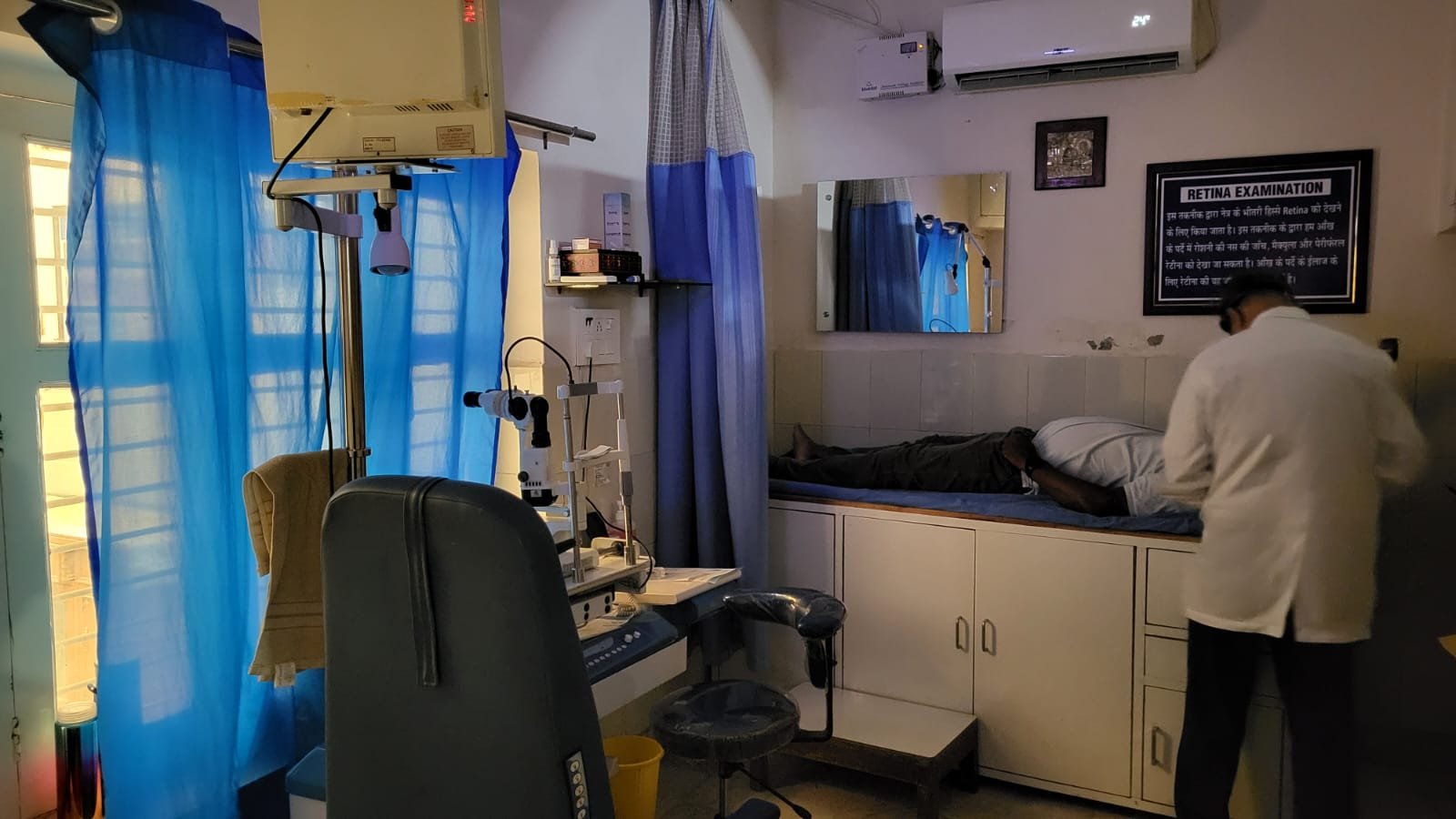
The retina lines the back of the eye and is where sight begins. Most retinal disease causes no pain and no redness — which is exactly why it is so often found late.
We keep a dedicated retina examination room, away from general OPD traffic. Examining the peripheral retina properly needs time and darkness, and it is not something to rush.
The largest group we see is people with diabetes. Diabetes damages the small blood vessels of the retina slowly and silently — vision feels completely normal while damage is already building. By the time sight blurs, the disease is usually well advanced.
That is why screening is not optional. A dilated retinal examination once a year is the only reliable way to catch changes while they can still be treated.
Yearly dilated examination for anyone with diabetes, whatever their vision feels like.
A quiet, controlled space for detailed macula and peripheral retina evaluation.
You are told what was found and what it means, in plain language.
Vision and pressure are checked, then dilating drops widen the pupil — they take 30 to 45 minutes to work. The retina is then examined in detail and you are given a written plan. Allow two to three hours in total.
Age-related macular changes, retinal tears and detachment, blockages in the retinal blood vessels, retinal changes from long-standing high blood pressure, and the thinning that comes with very high myopia.
Dilating drops blur your vision for several hours. Please arrange for someone to bring you home — do not plan to drive or ride yourself — and bring sunglasses. For urgent symptoms, call 0184-2254040.
Yes — this is the most important point on this page. Early diabetic retinopathy has no symptoms at all. Normal vision does not mean a normal retina.
No. Dilating drops leave your vision blurred and very light-sensitive for several hours. Please bring someone with you.
Occasional floaters are common and often harmless. But a sudden increase, new flashes, or a curtain across your vision needs same-day examination.
Existing damage generally is not, which is why early detection matters. Treatment and good sugar control slow or stop further loss and protect the vision you still have.
Talk to our team about retina care — we'll assess your eyes and explain your options clearly. No pressure, just honest advice.